How Spend-Based Accounting Punishes Sustainability
Nov 14, 2025
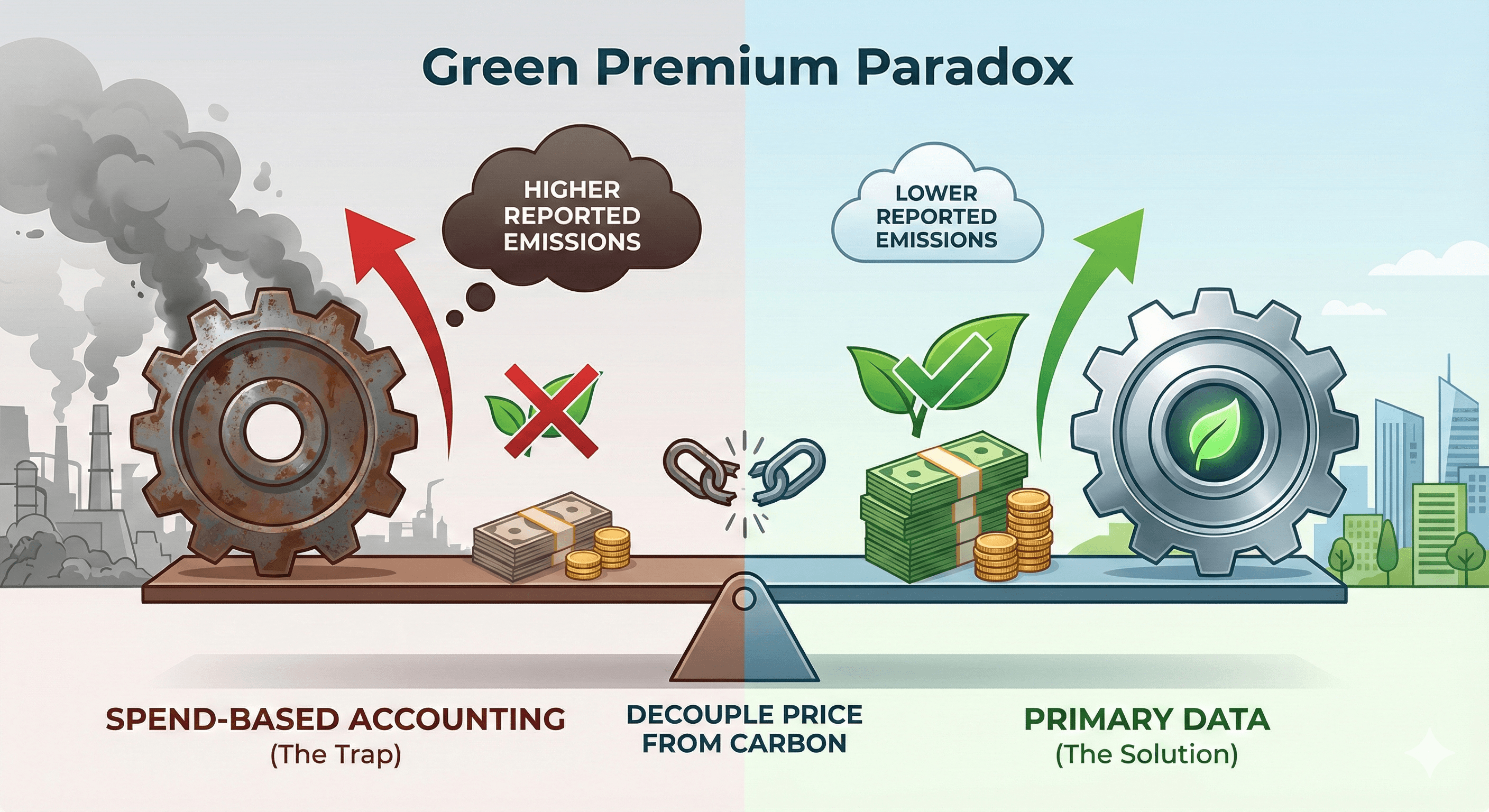
There is a fundamental flaw in the way 90% of large corporations measure their Scope 3 (Supply Chain) emissions. It is a flaw that actively discourages sustainable procurement and distorts Net Zero progress.
The flaw is Spend-Based Carbon Accounting.
In the early days of ESG reporting, spend-based estimates (Environmentally Extended Input-Output models) were a necessary evil. They allowed companies to estimate their total footprint by simply multiplying their financial spend by a generic industry average. But as we move into 2026, this methodology has transformed from a useful tool into a strategic straitjacket.
The Mathematics of the Paradox The core assumption of spend-based accounting is that Price = Carbon. The more you spend, the more carbon you are assumed to have emitted.
This creates a paradox when companies try to decarbonize. Low-carbon products frequently carry a "Green Premium"—they cost more than their high-carbon alternatives.
Consider a UK automotive manufacturer deciding between two steel suppliers:
Supplier A (Traditional): Sells standard dirty steel for £800/tonne.
Spend-Based Calculation: £800 × Average Steel Factor (1.5 kgCO2e/£) = 1,200 kgCO2e.
Supplier B (Sustainable): Sells Green Hydrogen Steel for £1,200/tonne.
Spend-Based Calculation: £1,200 × Average Steel Factor (1.5 kgCO2e/£) = 1,800 kgCO2e.
The Absurd Result: By doing the right thing and buying Green Steel, the company's reported emissions went UP by 50% simply because they spent more money.
Under spend-based methodologies, the only way to reduce your reported carbon footprint is to spend less money. This implies that to reach Net Zero, you must shrink your business. No CEO will accept this proposition.
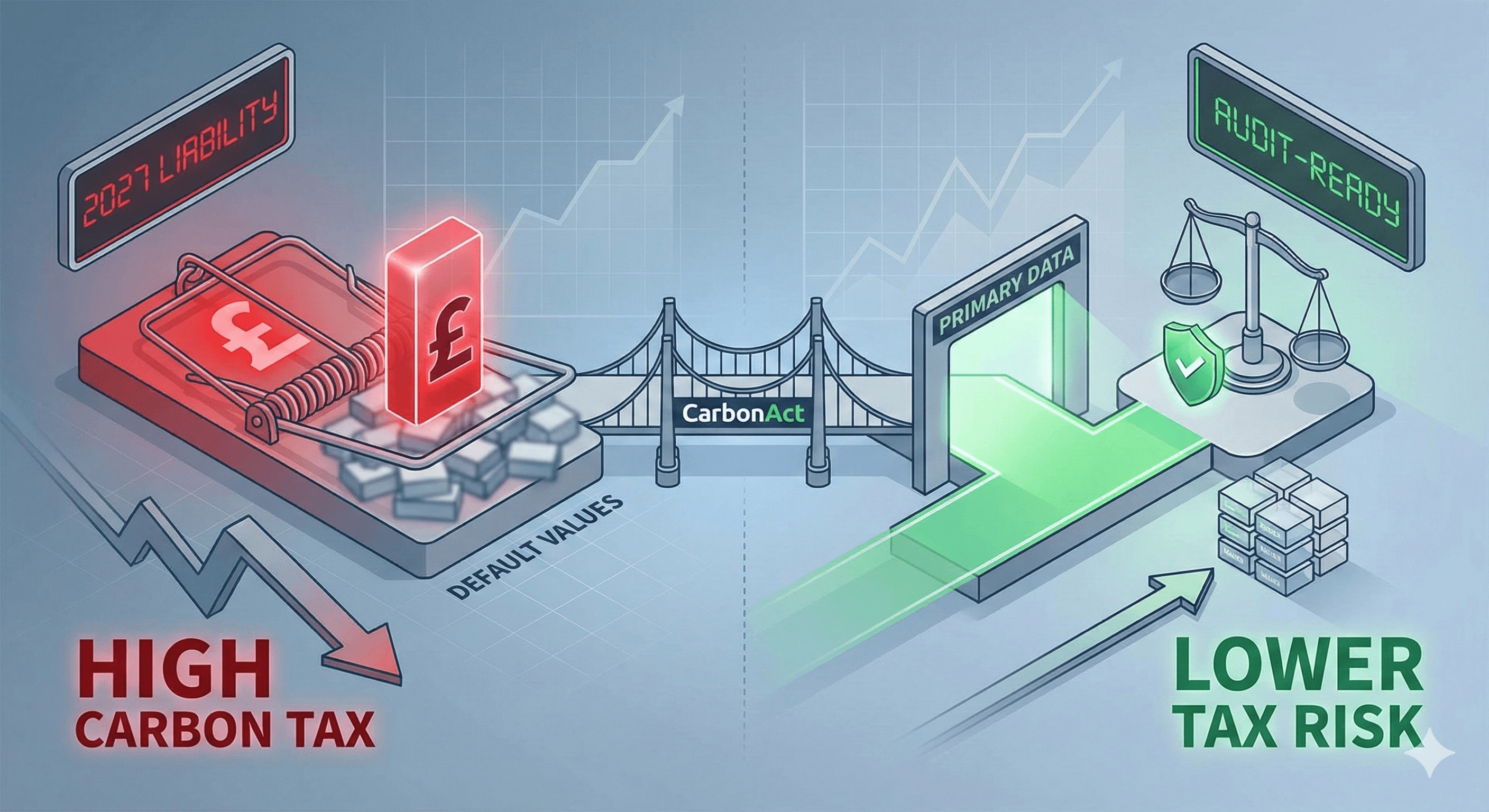
Decoupling Growth from Carbon: The only way to escape this paradox is to move to Primary Activity Data (measuring kilograms of material, not pounds sterling).
When you collect Primary Data, the price tag no longer matters. You report the physical reality: 1 tonne of Green Steel = 100 kgCO2e, regardless of the cost. This allows you to pay the Green Premium financially, but receive the "Carbon Discount" in your reporting.
CarbonAct exists to facilitate this switch, ensuring your sustainability investments are accurately reflected in your annual report.